
Underground done right the first time.
Sewer lines are buried, hard to see, and easy to do poorly. Bellies in the line cause backups for the life of the home. Wrong slope means recurring clogs and standing waste. Improper bedding leads to settled joints and root intrusion. We install sewer lines that work, and we document everything we put in the ground so you have an as built when you sell.
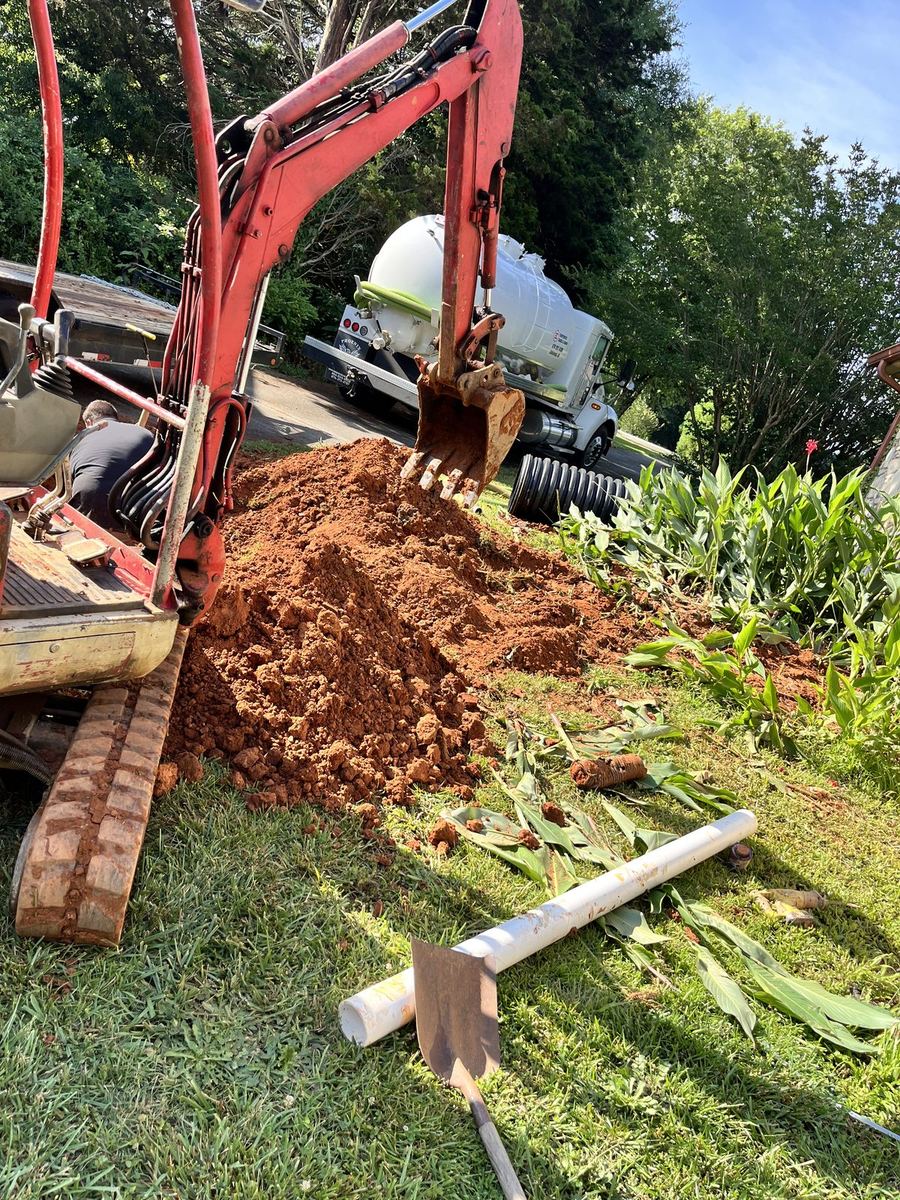
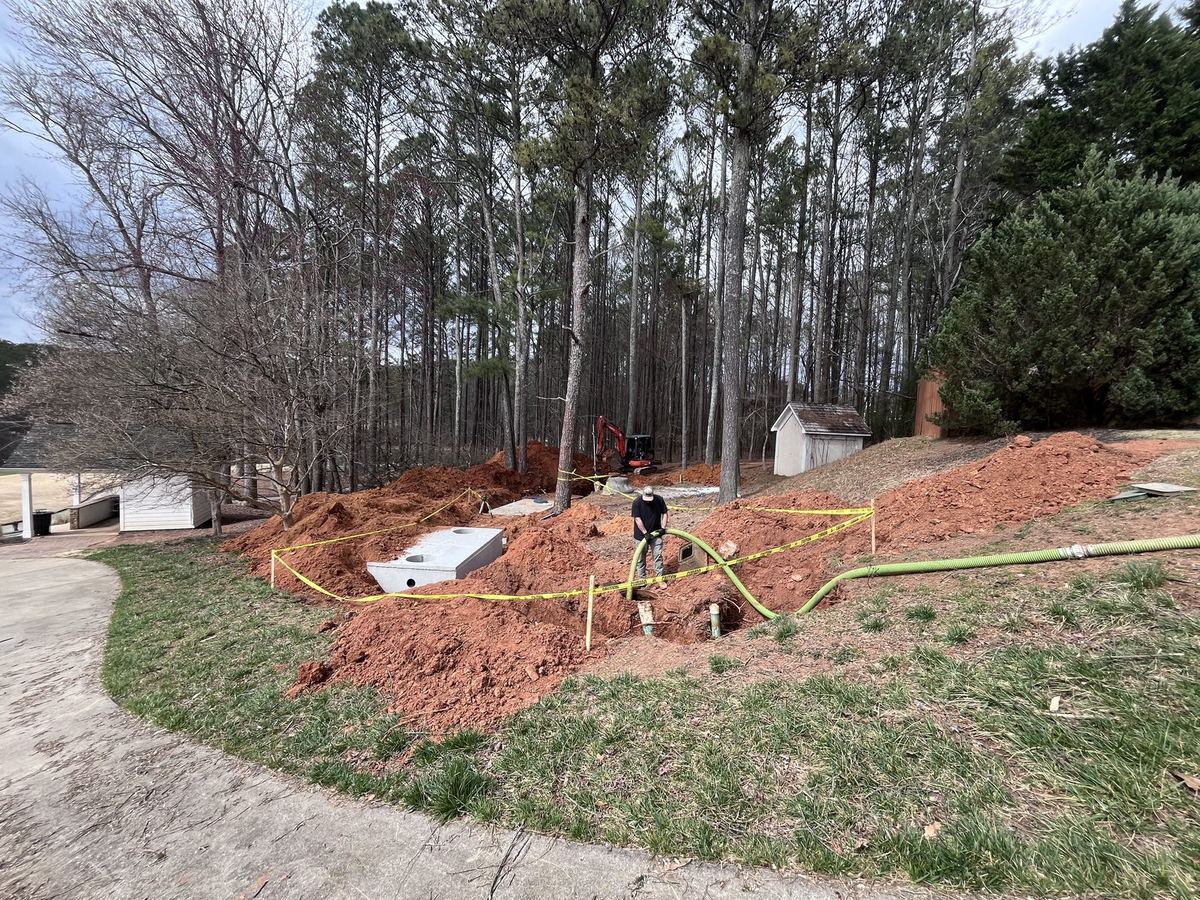
What we install
- House to septic tank sewer lines, new builds and replacements when existing clay or Orangeburg lines have failed.
- House to public sewer connections, for properties on city sewer or transitioning from septic to municipal service.
- Sewer line replacements, full replacement of failed or chronically problematic lines, with proper bedding and slope.
- Cleanout installations, adding accessible cleanouts where the original construction lacked them.
- Lateral sewer extensions, pool houses, garage apartments, barns, ADUs requiring connection to the existing system.
- Commercial sewer infrastructure, restaurants, retail, light commercial, and multi family.
Trenchless options
Open trench is the usual method. Where the site allows it we can go trenchless instead, either pipe bursting or trenchless replacement, to put in or swap a sewer line with minimal disruption to landscaping, driveways, hardscape, or mature trees. Trenchless costs more per foot. It often costs less in the end, once you add up putting back the hardscape, the sod, the sprinklers and the driveway after open trench work.
Trenchless isn't right for every job, line depth, route, and existing pipe condition all factor in. We give honest assessments of when it makes sense.
Material choices
- Schedule 40 PVC. The modern standard for residential. Long service life, good resistance to roots, easy to camera and clean.
- SDR-35 PVC, slightly less expensive, used where allowed for non pressurized waste lines. Same service life when installed properly.
- Cast iron, for indoor or near foundation installations where fire code requires it, or where homeowners want premium longevity.
- HDPE (high density polyethylene), common in trenchless pipe bursting replacements, jointed pipe replaced with a continuous fused HDPE line.
Why old lines fail
Most failed sewer lines we replace are one of three materials.
- Orangeburg. A tar impregnated cardboard like pipe used from the 1940s-1970s. By now, almost all original Orangeburg has collapsed or is on borrowed time. If your home is from this era and you've never replaced the sewer line, plan for it.
- Clay tile, durable material, but the joints between segments are vulnerable to root intrusion. Many clay lines from the 1950s-1980s are still functional but require regular root cutting.
- Old cast iron, service life of 50 to 75 years. After that, scale and corrosion close down the line from inside.
Permits and inspections
Sewer installation work in our service area typically requires county permits. We pull the permit, schedule the inspector, and handle all the paperwork. You don't have to learn the bureaucracy of your county's environmental health department.
Related services
Before we recommend full replacement, we always camera the existing line, see sewer camera inspections. For maintenance of an existing line that's still serviceable, see sewer line cleaning and hydro jetting.