
Permit to first flush — handled.
A new septic installation isn't just digging a hole and dropping a tank. It's soil evaluation, county permitting, system sizing, drain field design, install, and final inspection — and every step has to be right or the county won't pass it. We've installed every type of system out there, in every county in our North Georgia service area. We know the inspectors, we know the soil, and we know what fails when.
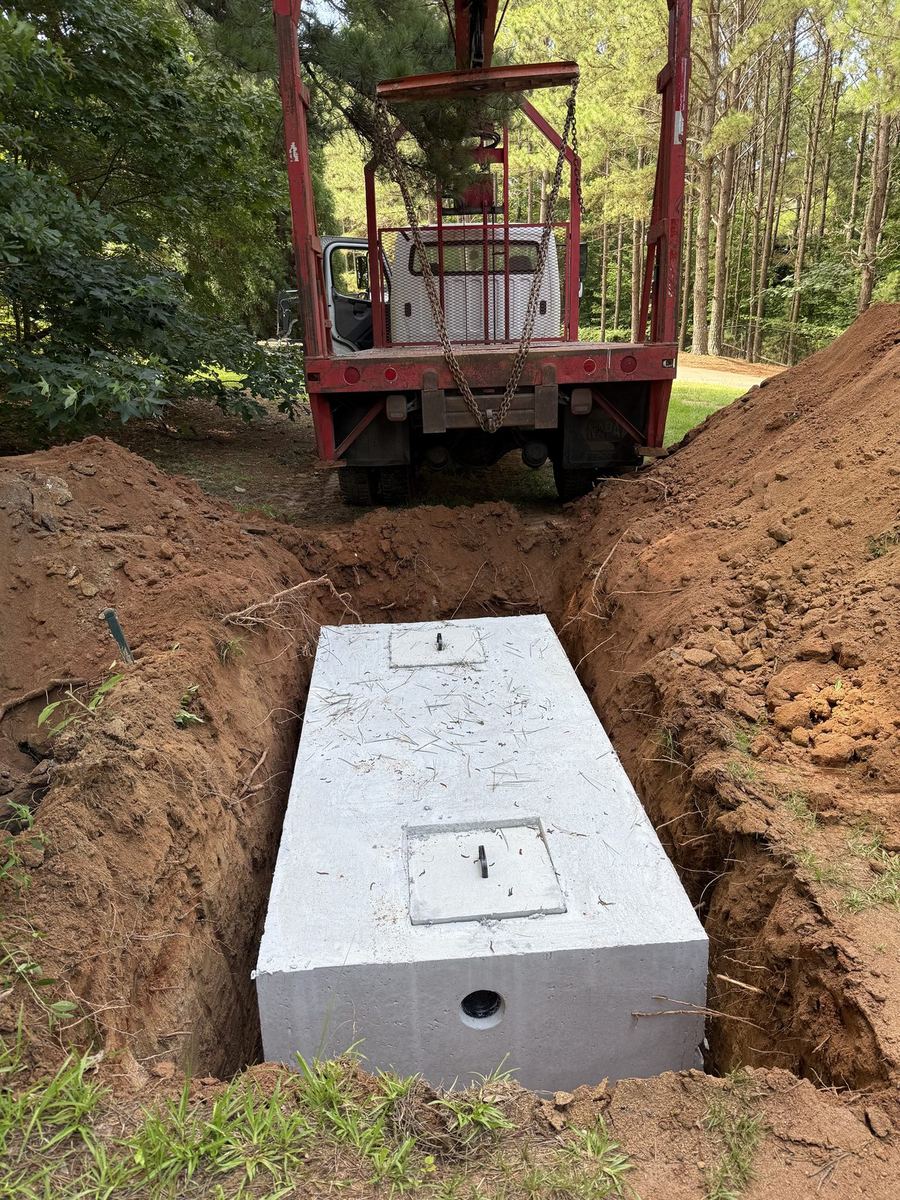
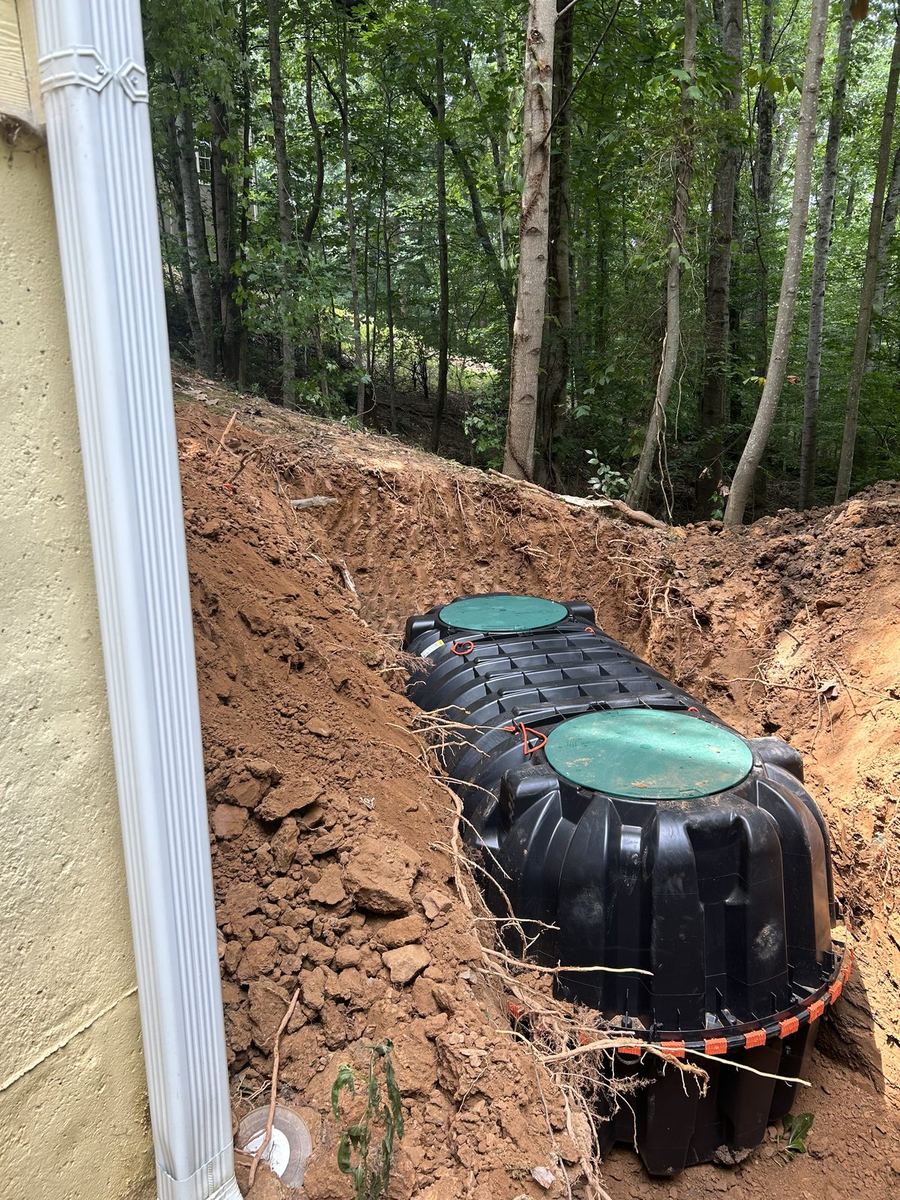
For new construction, we work directly with builders to keep septic on the critical path instead of becoming the bottleneck. For homeowners replacing a failed system, we coordinate with the health department, run the soil report, and have you back to flushing toilets in as little as a week from permit approval.
Systems we install
- Conventional gravity systems — concrete tank to distribution box to gravel-and-pipe drain field. The standard for most rural and exurban parcels with good soil.
- Aerobic Treatment Units (ATUs) — Norweco Singulair, Hoot, Jet, Delta, and other major brands. Required when soil percolation rates are poor or lot sizes are too small for conventional systems.
- Eljen GSF systems — geotextile sand filter technology with reduced footprint and biomat-resistant design. Good fit for tight lots or marginal soils.
- E-One pressure-dose systems — low-pressure pipe for sites where gravity isn't an option (above-tank fields, sloped sites).
- Drip distribution systems — for environmentally sensitive sites or where shallow soil mandates surface-area-heavy designs.
- Mound systems — high-water-table or shallow-bedrock sites that require the field to be built up above original grade.
- Commercial systems — restaurants, churches, schools, RV parks, light commercial.
How a new septic install works
- Soil evaluation / Level 3 report — required by Georgia for all new systems. A certified soil classifier examines a test pit and documents soil texture, structure, and depth to limiting layer. We coordinate this.
- System design — based on the soil report, parcel size, bedroom count, and any site constraints (wells, slopes, setbacks). We engineer the system to meet code with margin to spare.
- County permit — we submit the design package to the county environmental health department and handle any clarification requests.
- Installation — typically 2-4 days on a residential job, depending on system complexity and soil conditions. We're insured, bonded, and won't damage your driveway, irrigation, or landscaping without telling you first.
- Final inspection — the county inspector signs off before backfill. We coordinate timing so you're not stuck with an open hole over a weekend.
- Documentation — you receive the as-built drawing, permit copy, and warranty info for your records (and for the future sale of your home).
What it costs
Cost varies significantly based on system type (conventional gravity vs. ATU vs. alternative), tank size, drain field design, soil work, and access to the site. We provide a written, itemized estimate after a site evaluation. The variables are tank size, drain field design, soil work, and access to the site.
We give every customer a written, itemized estimate before any work begins — no surprise charges, no upcharges mid-job. Request a free estimate or call dispatch for site evaluation scheduling.
Replacement vs. repair
If your existing system has failed, replacement isn't always the answer. Many "failures" are actually clogged effluent filters, full tanks, broken distribution box outlets, or surface-level drain field issues that can be repaired for a fraction of replacement cost. We diagnose first, recommend second, and only sell you a new system if you actually need one. Learn about our repair work →